
If you've struggled to lose weight—or keep it off—despite trying diets, exercise, medications like GLP-1s, or other weight loss programs, you're not alone. For many people, obesity is a chronic medical condition that requires more than willpower to treat.
Gastric sleeve surgery, also called sleeve gastrectomy, is one of the most commonly performed weight loss surgeries in the United States. It can help patients achieve significant, sustained weight loss while improving obesity-related health conditions.
At ATX Robotic Surgery, our board-certified general surgeons, Dr. Shey Ditto and Dr. Jonathan Huynh, have additional training and experience in minimally invasive bariatric surgery, including gastric sleeve and gastric bypass procedures.
We believe patients deserve to understand their options, ask questions, and make informed decisions about their health.
What Is Gastric Sleeve Surgery?
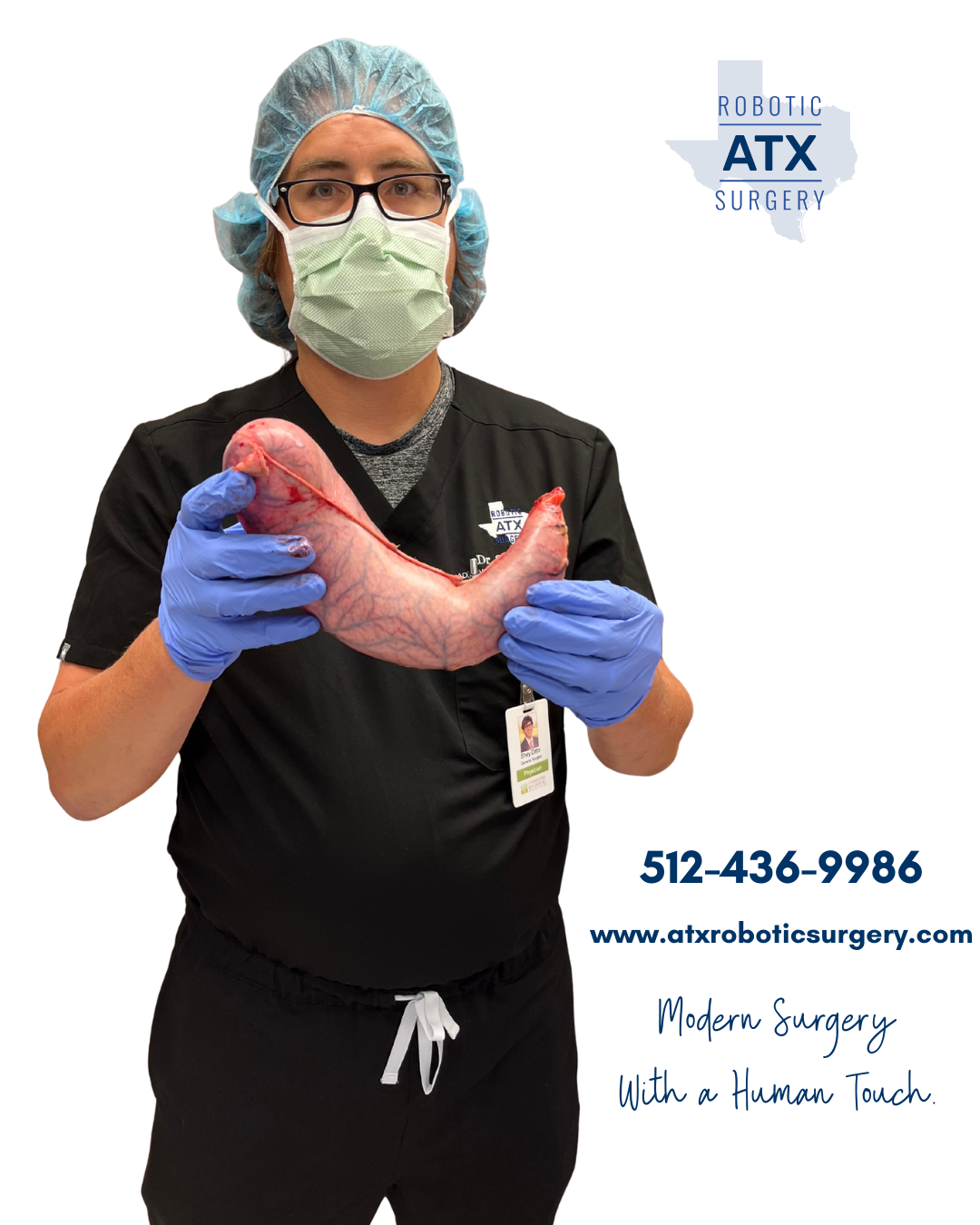
Gastric sleeve surgery is a weight loss procedure in which approximately 75–80% of the stomach is permanently removed, leaving behind a smaller, narrow, sleeve-shaped stomach.
And yes, the stomach in this picture is real!
The photograph shows stomach tissue removed during a gastric sleeve procedure. Although it may look surprising, it helps illustrate just how much the stomach is reduced during surgery.
The remaining stomach is much smaller, which helps patients feel full after eating smaller portions. The surgery also changes hormones involved in hunger, appetite, and metabolism.
Unlike gastric bypass surgery, gastric sleeve surgery does not reroute the intestines.
How Does Gastric Sleeve Surgery Help You Lose Weight?
Gastric sleeve surgery works in several ways:
Smaller stomach capacity: You feel satisfied with smaller meals.
Changes in hunger hormones: Removing part of the stomach can reduce levels of ghrelin, a hormone associated with hunger.
Improved metabolic function: Weight loss and hormonal changes may improve blood sugar regulation and other obesity-related conditions.
Long-term weight management: When combined with nutritional changes, physical activity, and ongoing medical care, gastric sleeve surgery can help patients maintain meaningful weight loss.
Gastric sleeve surgery is not simply about eating less. It changes how the body regulates hunger and metabolism, making it a powerful tool in the treatment of obesity.
How Much Weight Can You Lose After Gastric Sleeve Surgery?
Results vary, but many patients lose approximately 20–30% of their total body weight within the first one to two years following surgery.
For example, a patient who weighs 250 pounds might lose approximately 50–75 pounds.
Some patients lose more, while others lose less. Long-term success depends on several factors, including starting weight, underlying medical conditions, nutritional habits, physical activity, and ongoing follow-up.
Our goal at ATX Robotic Surgery isn't simply to help you lose weight. It's to help you improve your overall health and quality of life.
What Health Conditions Can Improve After Gastric Sleeve Surgery?
Obesity can contribute to numerous medical conditions, including:
Type 2 diabetes
High blood pressure
Obstructive sleep apnea
High cholesterol
Fatty liver disease
Joint pain and mobility limitations
Increased cardiovascular risk
Many patients experience significant improvement in these conditions after bariatric surgery. Some may even experience remission of certain conditions, although results are not guaranteed.
For many people, the health benefits extend well beyond the number on the scale.
Am I a Candidate for Gastric Sleeve Surgery?
You may be a candidate for bariatric surgery if you have struggled with obesity and have not achieved lasting results with nonsurgical treatments.
Current professional guidelines recommend considering metabolic and bariatric surgery for patients with:
A BMI of 35 or higher, regardless of whether other obesity-related conditions are present.
A BMI of 30–34.9 with metabolic disease or in selected patients who have not achieved durable weight loss or improvement with nonsurgical treatment.
A BMI of 27.5 or higher in certain Asian populations, based on ethnicity-specific recommendations.
Insurance coverage requirements may be different from medical eligibility guidelines. Many insurance plans still require a BMI of 40 or higher, or a BMI of 35 or higher with an obesity-related medical condition. Some plans have additional requirements or exclusions.
At ATX Robotic Surgery, we can help you understand whether bariatric surgery may be medically appropriate and discuss the insurance authorization process.
Is Gastric Sleeve Surgery Performed Robotically?
Gastric sleeve surgery is typically performed using minimally invasive techniques, including laparoscopic or robotic-assisted approaches.
With robotic-assisted surgery, the surgeon controls specialized instruments through small incisions using a sophisticated surgical system.
Potential advantages of minimally invasive surgery include smaller incisions, less postoperative discomfort, shorter hospital stays, and faster recovery compared with traditional open surgery.
However, robotic surgery is not necessarily better for every patient, and outcomes depend on the individual patient and procedure.
Dr. Ditto and Dr. Huynh can help determine which surgical approach is most appropriate for your needs.
What Is Recovery Like After Gastric Sleeve Surgery?
Most patients spend approximately one to two days in the hospital, although some may be discharged sooner depending on their condition and recovery.
After surgery, patients gradually progress through a structured dietary plan, generally beginning with liquids and advancing to pureed foods, soft foods, and eventually regular-texture meals in smaller portions.
Many patients return to desk work within one to two weeks, depending on their recovery and job requirements.
Long-term success also requires:
Eating smaller, protein-focused meals
Staying hydrated
Taking recommended vitamin and mineral supplements
Participating in regular physical activity
Attending follow-up appointments and nutritional monitoring
Bariatric surgery is a lifelong commitment to your health, and having a supportive surgical team makes a difference.
What Are the Risks of Gastric Sleeve Surgery?
Like any operation, gastric sleeve surgery carries risks. These include bleeding, infection, blood clots, leaks from the stomach staple line, narrowing of the sleeve, and nutritional deficiencies.
Gastric sleeve surgery can also cause or worsen acid reflux in some patients.
Because the removed portion of the stomach cannot be restored, gastric sleeve surgery is permanent.
For patients with significant reflux or certain other medical conditions, gastric bypass may be a more appropriate option.
That's why an individualized consultation is so important.
Frequently Asked Questions About Gastric Sleeve Surgery
Is gastric sleeve surgery permanent?
Yes. Approximately 75–80% of the stomach is permanently removed. The procedure cannot be reversed.
Will I always feel hungry after gastric sleeve surgery?
Many patients experience reduced hunger following surgery because of changes in stomach size and appetite-related hormones. However, hunger can return or change over time, and patients still need to develop healthy eating habits.
Can your stomach stretch after gastric sleeve surgery?
The remaining stomach can expand somewhat over time. Consistently eating beyond fullness may contribute to increased food intake and weight regain.
Is gastric sleeve surgery better than taking GLP-1 medications?
Not necessarily. Both bariatric surgery and GLP-1 medications can be effective treatments for obesity. Surgery generally produces greater average long-term weight loss than many nonsurgical treatments, but the best option depends on your health, goals, medication response, and personal preferences.
Can you regain weight after gastric sleeve surgery?
Yes. Some weight regain can occur, particularly several years after surgery. Ongoing nutritional support, physical activity, medical follow-up, and, when appropriate, anti-obesity medications can help with long-term weight management.
Will insurance cover gastric sleeve surgery?
Many commercial insurance plans cover bariatric surgery when specific medical criteria are met. Coverage varies by policy, and some plans exclude weight loss surgery entirely. Our team can help patients understand their benefits and authorization requirements.
Ready to Find Out Whether Gastric Sleeve Surgery Is Right for You?
If you've tried diets, exercise, weight loss medications, or other approaches without achieving lasting results, it may be time to explore additional options.
At ATX Robotic Surgery, our board-certified general surgeons, Dr. Shey Ditto and Dr. Jonathan Huynh, offer personalized bariatric surgery consultations, including evaluation for minimally invasive gastric sleeve and gastric bypass surgery.
We'll take the time to answer your questions, explain your options, and help you decide whether surgery is the right next step.
Conveniently located in North Austin and South Austin, we're here to help Central Texas patients take the next step toward better health.
Call 512-436-9986 or visit www.atxroboticsurgery.com to schedule your consultation.
Modern Surgery with a Human Touch.
This article is intended for general educational purposes and does not replace individualized medical advice. Surgical eligibility, risks, recovery, and insurance coverage vary by patient.
