
Robotic Cholecystectomy (Gallbladder Removal) Surgery in Austin, TX
Gallbladder problems are common and can cause significant abdominal pain, nausea, and other digestive symptoms. When gallstones or other gallbladder conditions cause recurrent symptoms or complications, gallbladder removal, also called a cholecystectomy, may be recommended.
At ATX Robotic Surgery, our surgeons offer minimally invasive, robot-assisted gallbladder removal for appropriate patients in the Austin area. Robotic technology allows the surgeon to control specialized instruments through small abdominal incisions while viewing the surgical field on a high-definition, magnified 3D display.
The goal is the same as with conventional laparoscopic surgery: safely remove the gallbladder while minimizing the impact of surgery on the patient.
Understanding the Gallbladder
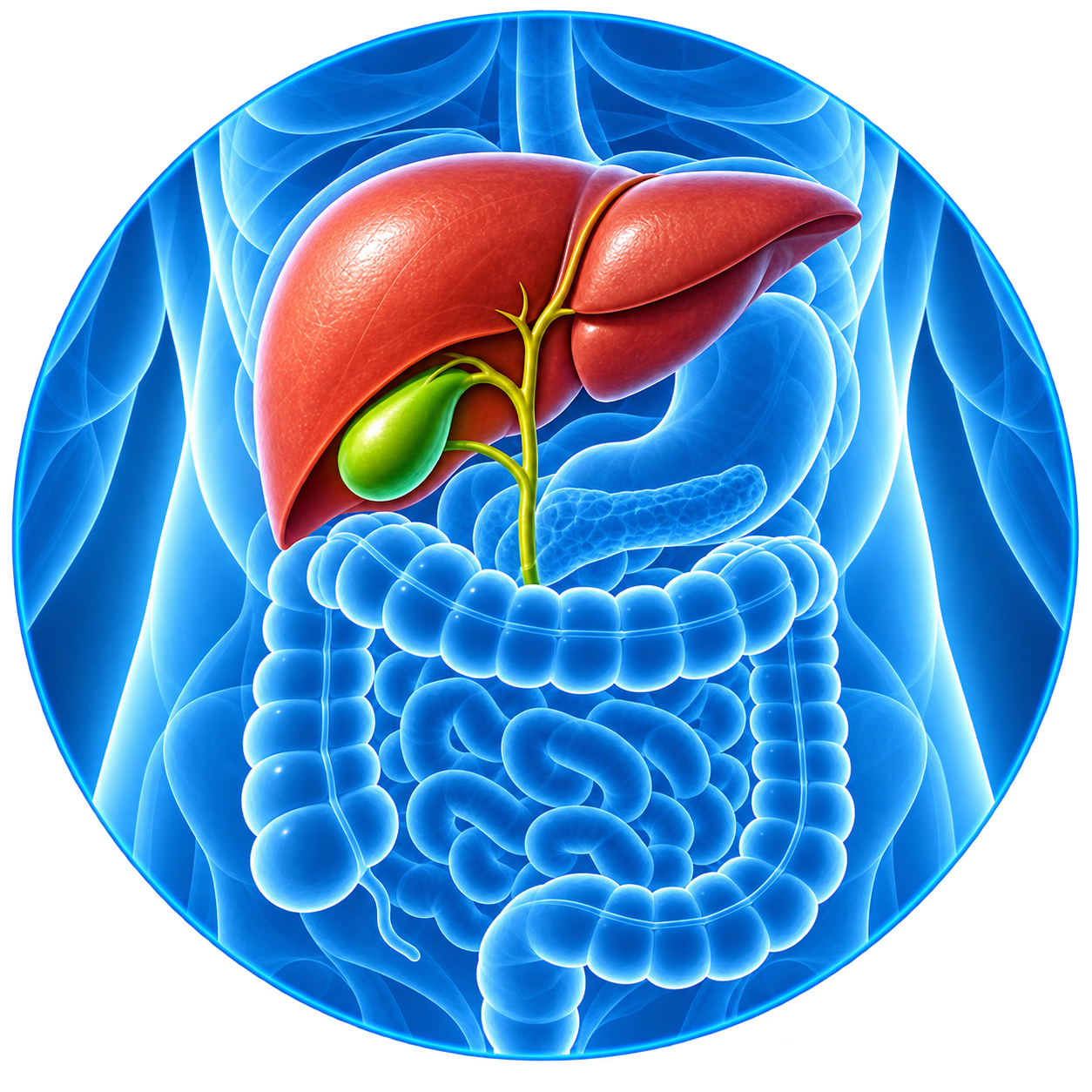
The gallbladder is a small, pear-shaped organ located beneath the liver in the upper right portion of the abdomen. It stores and concentrates bile, a digestive fluid produced by the liver.
When you eat, the gallbladder releases bile into the small intestine to help digest fats.
The gallbladder is not essential for normal digestion. After it is removed, bile continues to flow directly from the liver into the small intestine. Most people are able to eat and live normally without a gallbladder. Some people may experience temporary changes in bowel habits, such as softer or more frequent stools, after surgery.
What Are Gallstones?
Gallstones are hardened deposits that develop within the gallbladder. They can be made primarily from cholesterol or from substances such as bilirubin.
Many people have gallstones without experiencing symptoms. When gallstones block the normal flow of bile, however, they can cause pain and other complications.
Gallstones may cause:
Pain in the upper right or upper middle abdomen
Pain that may radiate to the back or right shoulder
Pain that occurs after eating, particularly after a fatty meal
Nausea or vomiting
Indigestion or a feeling of fullness
Fever or chills when inflammation or infection develops
Yellowing of the skin or eyes (jaundice) if a bile duct becomes blocked
Severe or persistent abdominal pain, fever, jaundice, repeated vomiting, or other concerning symptoms should be evaluated promptly. Chest pain or symptoms that could represent a heart attack should always be treated as a potential emergency rather than assumed to be caused by the gallbladder.
What Are the Risks of Gallbladder Surgery?
Gallbladder removal is a commonly performed operation, but as with any surgery, complications are possible.
Potential complications include:
Bleeding
Infection
Bile leakage
Injury to the bile duct
Injury to nearby organs or blood vessels
Blood clots
Risks related to anesthesia
The need for additional procedures
Conversion to an open operation when necessary for safety
The risk of complications varies depending on the patient's health, the severity of gallbladder disease, previous abdominal surgery, inflammation, anatomy, and other factors.
In some situations, the safest approach is to convert a minimally invasive procedure to an open operation. This is a surgical decision made to protect the patient and safely complete the procedure.
What Gallbladder Conditions May Require Surgery?
Gallbladder removal is most commonly performed for symptomatic gallstones and complications related to gallstones. Depending on the individual patient, surgery may be recommended for conditions including:
Symptomatic gallstones (cholelithiasis)
Acute or chronic cholecystitis, or inflammation of the gallbladder
Gallstones that have entered the common bile duct
Gallstone-related pancreatitis
Certain gallbladder polyps
Other gallbladder conditions for which removal is medically appropriate
Not everyone with gallstones needs surgery. People who have gallstones without symptoms often do not require treatment. Your surgeon will consider your symptoms, imaging, medical history, and overall health when determining whether surgery is appropriate.
How Are Gallbladder Problems Diagnosed?
Your evaluation may include a medical history, physical examination, blood tests, and imaging.
An ultrasound is commonly used to look for gallstones and signs of gallbladder inflammation. Depending on your symptoms and the information needed, your physician may also recommend a CT scan, HIDA scan, MRI/MRCP, or other testing.
If there is concern about a stone in the common bile duct, additional imaging or an endoscopic procedure may be necessary before or after gallbladder surgery.
What Is a Robotic Cholecystectomy?
A robotic cholecystectomy is a minimally invasive operation to remove the gallbladder.
The procedure is performed under general anesthesia. Instead of making one large abdominal incision, the surgeon generally uses several small incisions to access the abdomen.
During robotic surgery:
Small ports are placed through the abdominal wall.
A high-definition camera provides a magnified view of the surgical area.
Specialized instruments are inserted through the ports.
The surgeon controls the instruments from a console.
The gallbladder is carefully separated from the surrounding structures and removed through one of the small incisions.
The incisions are closed after the procedure.
The robot does not perform the operation independently. The surgeon remains in control of the robotic instruments throughout the procedure.
Robotic surgery and conventional laparoscopic surgery are both minimally invasive approaches. Whether robotic surgery is appropriate depends on the patient's condition, anatomy, surgical history, and the surgeon's judgment.
Fluorescence Imaging During Gallbladder Surgery
When appropriate, ATX Robotic Surgery may use fluorescence imaging with indocyanine green (ICG) to help visualize the biliary anatomy during robotic surgery.
The technique uses an intravenous fluorescent dye that can make structures of the biliary system more visible under near-infrared imaging. This may help the surgeon identify important anatomy during the operation.
Fluorescence imaging is an additional visualization tool; it does not replace careful surgical dissection and identification of the relevant anatomy. Intraoperative imaging such as cholangiography may also be used when clinically appropriate.
Robotic vs. Laparoscopic Gallbladder Surgery
Both robotic and conventional laparoscopic cholecystectomy use minimally invasive techniques and small abdominal incisions.
With laparoscopic surgery, the surgeon directly controls the laparoscopic instruments. With robotic surgery, the surgeon controls specialized instruments from a console.
Robotic systems provide features such as wristed instrument movement and a magnified three-dimensional view. These capabilities may be particularly useful in certain surgical situations.
However, robotic surgery is not automatically the right choice for every patient, and current evidence does not establish robotic cholecystectomy as universally superior to conventional laparoscopic surgery. Your surgeon can discuss which approach is most appropriate for you.
What Can I Expect After Gallbladder Removal?
Many laparoscopic and robotic gallbladder procedures are performed as outpatient or short-stay operations, although some patients require an overnight hospital stay.
After surgery, it is normal to experience some soreness around the incisions and abdominal discomfort. Some patients also experience temporary shoulder discomfort related to the gas used during minimally invasive surgery.
Your recovery instructions will depend on your individual procedure and health.
In general, patients are encouraged to:
Walk and gradually increase activity as tolerated
Follow their surgeon's instructions regarding lifting and strenuous activity
Keep the incisions clean and follow wound-care instructions
Advance their diet as tolerated
Take prescribed or recommended pain medication as directed
Arrange for transportation home after surgery
Many patients return to normal daily activities within approximately a week after minimally invasive gallbladder removal, but recovery varies. Your surgeon will provide specific instructions about returning to work, exercise, driving, and heavier physical activity.
When Should I Call My Doctor After Surgery?
Contact your surgical team promptly if you develop symptoms such as:
Fever
Increasing or severe abdominal pain
Persistent vomiting or inability to keep fluids down
Increasing redness, swelling, drainage, or pus around an incision
Yellowing of the skin or eyes
Significant bleeding
Shortness of breath or other concerning symptoms
If you experience severe chest pain, difficulty breathing, loss of consciousness, or another medical emergency, call 911.
Schedule a Gallbladder Surgery Consultation in Austin
If you have been diagnosed with gallstones, gallbladder inflammation, or another gallbladder condition, the surgeons at ATX Robotic Surgery can evaluate your condition and discuss your treatment options.
Our goal is to provide individualized surgical care using minimally invasive techniques when appropriate.
Patient Instructions & Resources
Download helpful guides to prepare for your appointment and to support your recovery after surgery.
BEFORE YOUR APPOINTMENT
Pre-Consultation Guide
Review what to bring, what to expect during your consultation, and how to prepare for your appointment.
Pre-Consultation Information
-
Please bring a Photo ID and insurance information, a list of medications you are currently taking, and any relevant medical records or office visit notes.
-
Our team will discuss any questions or concerns, review your medical history to understand symptoms or allergies, perform a focused physical exam, and discuss the next steps for a plan tailored to you.
-
Write down your symptoms and when they occur, note any activities that make symptoms better or worse, plan to bring a family member if helpful.
Gallbladder Removal Surgery FAQs
-
A cholecystectomy is the surgical removal of the gallbladder. It is most commonly performed to treat symptomatic gallstones or complications such as gallbladder inflammation. The operation may be performed using conventional laparoscopy, robotic assistance, or an open surgical approach depending on the circumstances.
-
Not necessarily. Gallstones that do not cause symptoms often do not require treatment. Surgery may be recommended when gallstones cause recurrent symptoms or complications. Your surgeon can review your symptoms and imaging to determine whether gallbladder removal is appropriate.
-
Gallbladder pain commonly occurs in the upper right or upper middle abdomen and may occur after eating. It can sometimes radiate toward the back or right shoulder and may be accompanied by nausea or vomiting.
Because abdominal, chest, and back pain can have many causes, symptoms alone cannot determine whether the gallbladder is responsible. New or severe chest pain should be evaluated urgently.
-
Yes. The gallbladder stores bile, but it is not essential for digestion. After gallbladder removal, bile continues to flow from the liver into the small intestine. Most people can return to a normal diet and lifestyle after recovery.
-
Both approaches are minimally invasive. In conventional laparoscopic surgery, the surgeon manually controls the instruments. In robotic surgery, the surgeon controls specialized instruments from a console.
Robotic systems provide features such as a magnified 3D view and wristed instruments. Your surgeon can explain whether those capabilities offer advantages for your particular operation.
-
Both robotic and laparoscopic cholecystectomy are established minimally invasive approaches. Available evidence does not show that robotic surgery is universally superior to conventional laparoscopy.
The safety of gallbladder surgery depends on many factors, including the patient's condition, the complexity of the disease, the surgeon's experience, and careful identification of the biliary anatomy.
-
The length of surgery varies depending on the patient's anatomy, the severity of gallbladder disease, previous abdominal surgery, and whether additional procedures are necessary.
Your surgeon can give you a more individualized estimate during your consultation.tion
-
Many minimally invasive gallbladder procedures are performed on an outpatient basis, and some patients go home the same day. Others may need an overnight stay depending on their medical condition, the complexity of the operation, or their recovery after anesthesia.
-
Recovery varies from person to person. Many patients are able to resume normal daily activities within about a week after minimally invasive surgery, although strenuous exercise, heavy lifting, and physically demanding work may require additional time.
Your surgeon will provide individualized activity restrictions and instructions.
-
Some patients prefer smaller or lower-fat meals during the first several days or weeks after surgery because their digestive system is adjusting to the absence of the gallbladder.
Most people eventually return to a normal diet. A small number of patients may experience temporary diarrhea or more frequent stools after surgery.
-
Gallstones cannot form inside a gallbladder that has been removed. However, stones can occasionally be present in or develop within the bile ducts, and additional treatment may sometimes be necessary.
-
A stone in the common bile duct may require additional evaluation and treatment. Depending on the circumstances, your medical team may recommend a procedure such as ERCP, specialized imaging, or treatment during surgery.
Your surgeon will explain the options if a bile duct stone is suspected.
-
A cholangiogram is an imaging study used to evaluate the bile ducts. It can help the surgical team identify biliary anatomy and, in some situations, identify stones in the common bile duct.
Depending on the circumstances, imaging may be performed using X-ray-based intraoperative cholangiography or fluorescence imaging with ICG.
-
Firefly is a fluorescence imaging technology available with certain da Vinci robotic systems. When used with indocyanine green (ICG), it can help visualize structures such as the biliary anatomy during surgery.
It is a visualization aid used by the surgeon and does not replace careful identification and dissection of the relevant anatomy.
-
Robotic surgery is not appropriate for every patient or every surgical situation. Your surgeon may recommend conventional laparoscopic surgery or, in some circumstances, an open operation.
The priority is selecting the approach that allows the operation to be performed safely and effectively for your individual situation.
-
Seek prompt medical evaluation for severe or persistent abdominal pain, fever, chills, jaundice, repeated vomiting, or other concerning symptoms.
Chest pain, severe difficulty breathing, fainting, or symptoms that could indicate a heart attack should be treated as a medical emergency. Call 911 rather than assuming the symptoms are caused by gallbladder disease.
-
The decision depends on your symptoms, diagnosis, imaging results, medical history, and overall health. During a consultation, your surgeon can discuss whether surgery is appropriate, which surgical approach may be suitable, what alternatives exist, and what you can expect during recovery.
-
If you have been diagnosed with gallstones, gallbladder inflammation, or another gallbladder condition, the surgeons at ATX Robotic Surgery can evaluate your condition and discuss your treatment options.
Our goal is to provide individualized surgical care using minimally invasive techniques when appropriate.